
APPLIED KINESIOLOGY
Applied Kinesiology (AK) is a comprehensive diagnostic approach used to assess how the body is functioning structurally, biochemically and chemically. Using precise muscle testing techniques, our practitioners evaluate how the nervous system responds to different stimuli — helping uncover underlying stressors that may contribute to pain, fatigue, digestive issues, hormonal imbalance, or emotional stress.
Rather than guessing at symptoms, Applied Kinesiology helps guide personalized, targeted care plans.
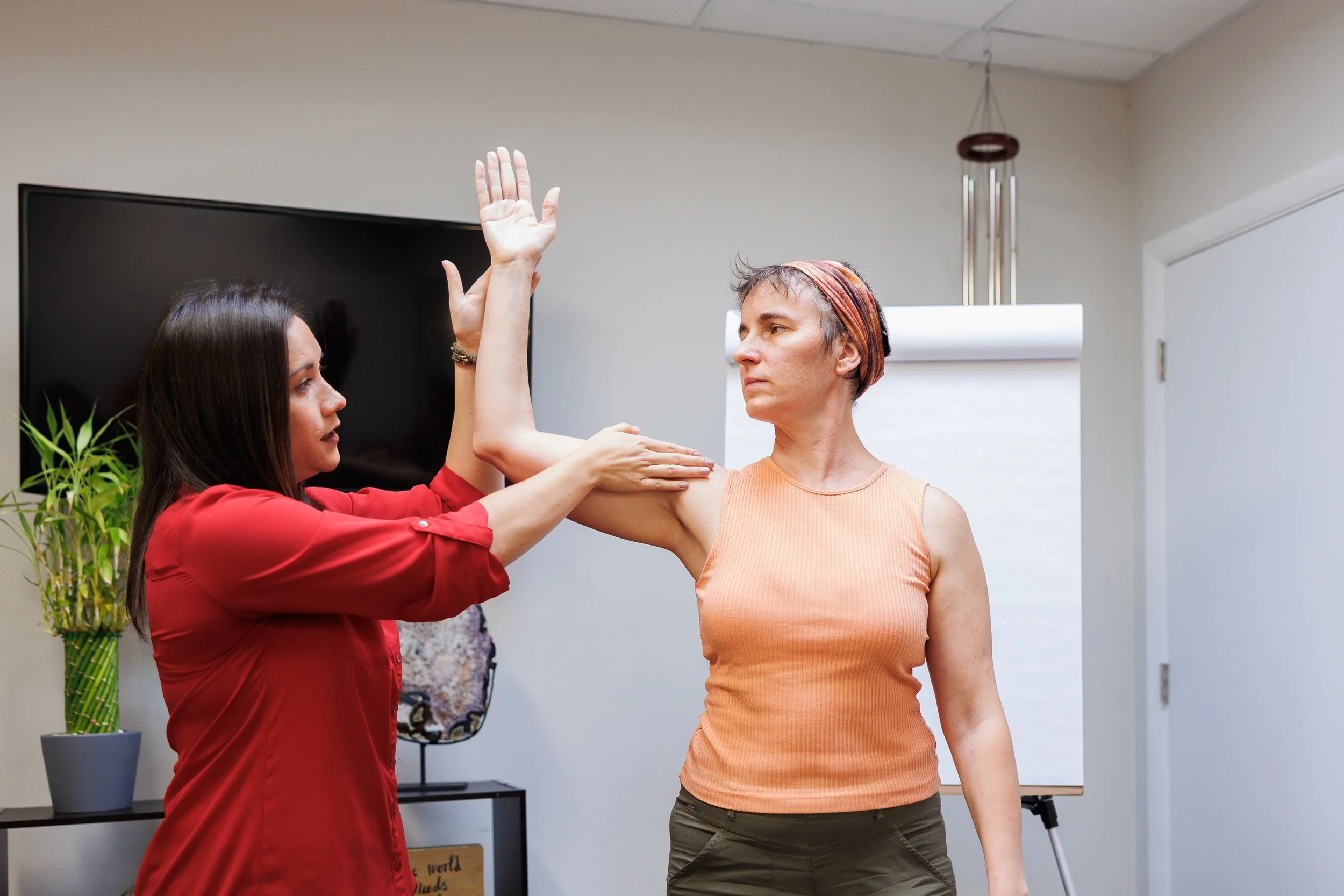
WHAT IS APPLIED KINESIOLOGY?
Applied Kinesiology (AK) is a system that evaluates structural, chemical and mental aspects of health using manual muscle testing combined with other standard methods of diagnosis. AK is a non-invasive system that evaluates body function by assessing the musculoskeletal system.
Treatments may involve specific joint manipulation or mobilization, soft tissue therapies, cranial techniques, meridian and acupuncture stimulation, clinical nutrition and dietary management, reflex points, emotional release, and evaluating environmental irritants.
The triad of health lists the three basic causes of health problems. They are structural, chemical, and emotional, with structure as the base of the triad. Literally, all health problems, whether functional or pathological, are involved with one part or all parts of the triad. This is not new to chiropractic, as its founder, D.D. Palmer in his text, “The Science, Art, and Philosophy of Chiropractic” states that “The determining causes of disease are traumatism, poison and autosuggestion.” AK enables the doctor to evaluate the triad’s functional balance and direct therapy toward the imbalanced side or sides.
The practicing physician of AK is aware of the triad of health, and evaluates every patient for all three sides, increasing the ability to find the basic underlying cause of a patient’s symptoms. AK skills are developed and approved by the International College of Applied Kinesiology Board of Standards.
These skills are refined from many disciplines including Chiropractic, Osteopathy, Medicine, Dentistry, Acupuncture, Biochemistry, Psychology, Homeopathy, and Naturopathy etc. Members of these professions share knowledge through the publications and conferences of the International College of Applied Kinesiology (ICAK).
WHAT TO EXPECT
During your session:
A practitioner will perform gentle muscle testing on various muscle groups.
Specific stimuli (such as pressure, nutrients, reflex points, or movement) may be introduced to evaluate changes in muscle response.
Findings help guide a customized treatment plan.
Sessions typically last 15–30 minutes.
Applied Kinesiology is often integrated with Chiropractic Care, Quantum Neurology, Nutritional Therapy, and Detox Programs at Be Optimal.
BENEFITS OF APPLIED KINESIOLOGY
Identifies root causes rather than masking symptoms
Supports precise, individualized treatment planning
Evaluates structural, chemical, and emotional stressors
Helps improve posture, pain patterns, and muscular balance
Supports immune, digestive, and hormonal function
Enhances overall nervous system communication
WHO BENEFITS MOST
Applied Kinesiology may be helpful for individuals who:
Experience chronic pain or structural imbalance
Have digestive, hormonal, or immune concerns
Struggle with fatigue or unexplained symptoms
Want personalized functional assessment
Seek integrative, root-cause care
WHY PATIENTS CHOOSE BE OPTIMAL IN SKOKIE
Triad of Health approach: Structural, chemical, and emotional factors are all evaluated.
Comprehensive care model: Integrated with chiropractic, neurological, and wellness services.
Personalized treatment plans: No one-size-fits-all protocols.
Convenient North Shore location: Serving Skokie, Evanston, Wilmette, Glenview, and Chicago’s North Side.